
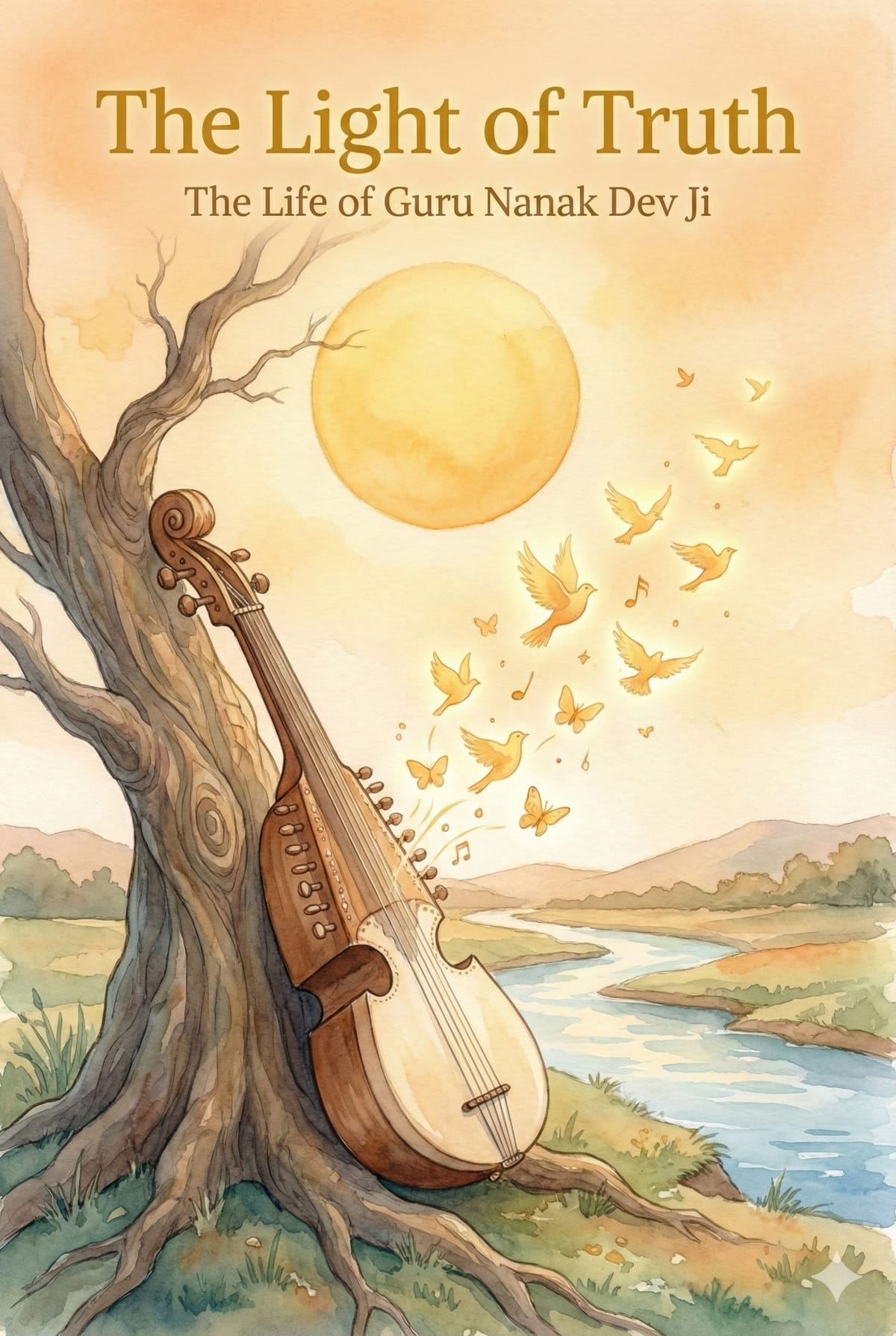
A Lamp at the Window
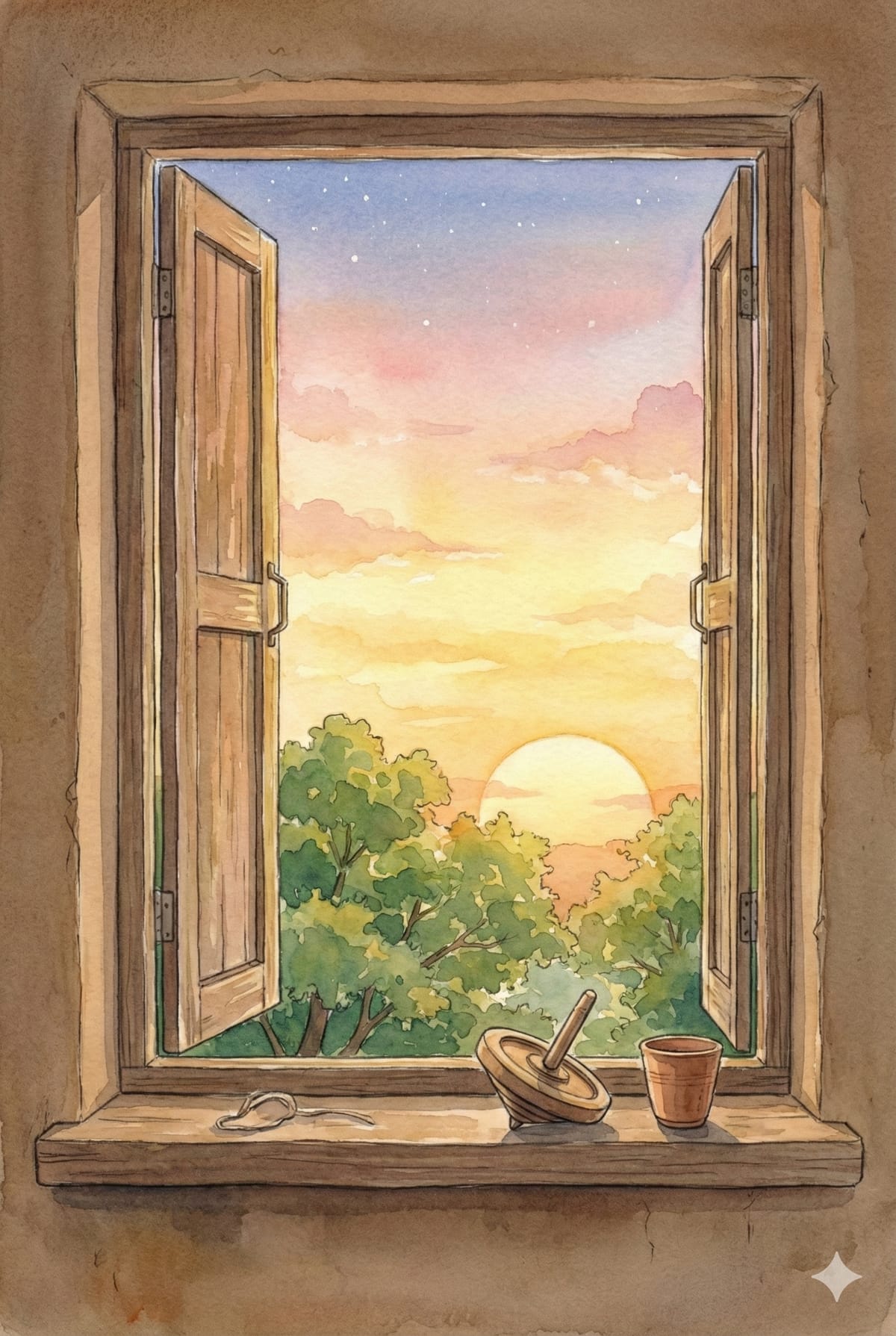
In a small village called Talwandi, on a spring morning in 1469, a baby boy was born. His mother, Mata Tripta Ji, held him close. His father, Mehta Kalu Ji, stood happily beside them. A small clay lamp burned at the window of their home.
They named the baby Nanak.
He had an older sister called Nanaki, five years older than him. Nanak loved her so much that he called her Bebe Nanaki — dear elder sister — and would do so all his life.
As Nanak grew, his parents began to notice something. Other children chased each other and shouted, but Nanak would sit very still. He watched a beetle climb a leaf. He watched the way smoke from the kitchen fire rose and turned silver in the sun. He listened to the cattle breathing in the yard.
“What are you looking at, son?” his mother would ask.
“Everything,” Nanak would say.
Bebe Nanaki understood him best. She would sit beside him under the trees and let him point at the things he had noticed. Once he pointed at the lamp burning in their window and said, “Bebe, the flame never stops giving its light. It doesn’t ask anything back.”
Bebe Nanaki smiled. She knew, even then, that her little brother was seeing something most people miss.
The Thread That Could Burn
When Nanak was ten years old, his family prepared a big ceremony for him. In those days, many Hindu boys were given a sacred cotton thread called a Janeu to wear over the shoulder. People believed the thread made a boy holy and marked him as belonging to a high family.
The relatives arrived. The family priest, Pandit Hardayal, brought the thread. Everyone sat in a circle. Nanak watched, the way he always watched.
When the Pandit lifted the thread to place it over Nanak’s shoulder, the boy gently caught his wrist.
“Pandit Ji,” Nanak said, “what is this thread, and what will it do for me?”
“It is sacred,” the Pandit answered. “It shows you belong to a high family. It will help you even after you die.”
Nanak looked at the thread. He looked at it the way he had looked at the beetle and the smoke and the buffaloes — carefully, without hurry.
“Pandit Ji,” he said, “this thread is cotton. It can break. It can get dirty. When my body is burned at the end of my life, this thread will burn with it. How can such a thread help me after I am gone?”
The relatives shifted uncomfortably. The Pandit had no answer ready.
Then Nanak said something the family would never forget.
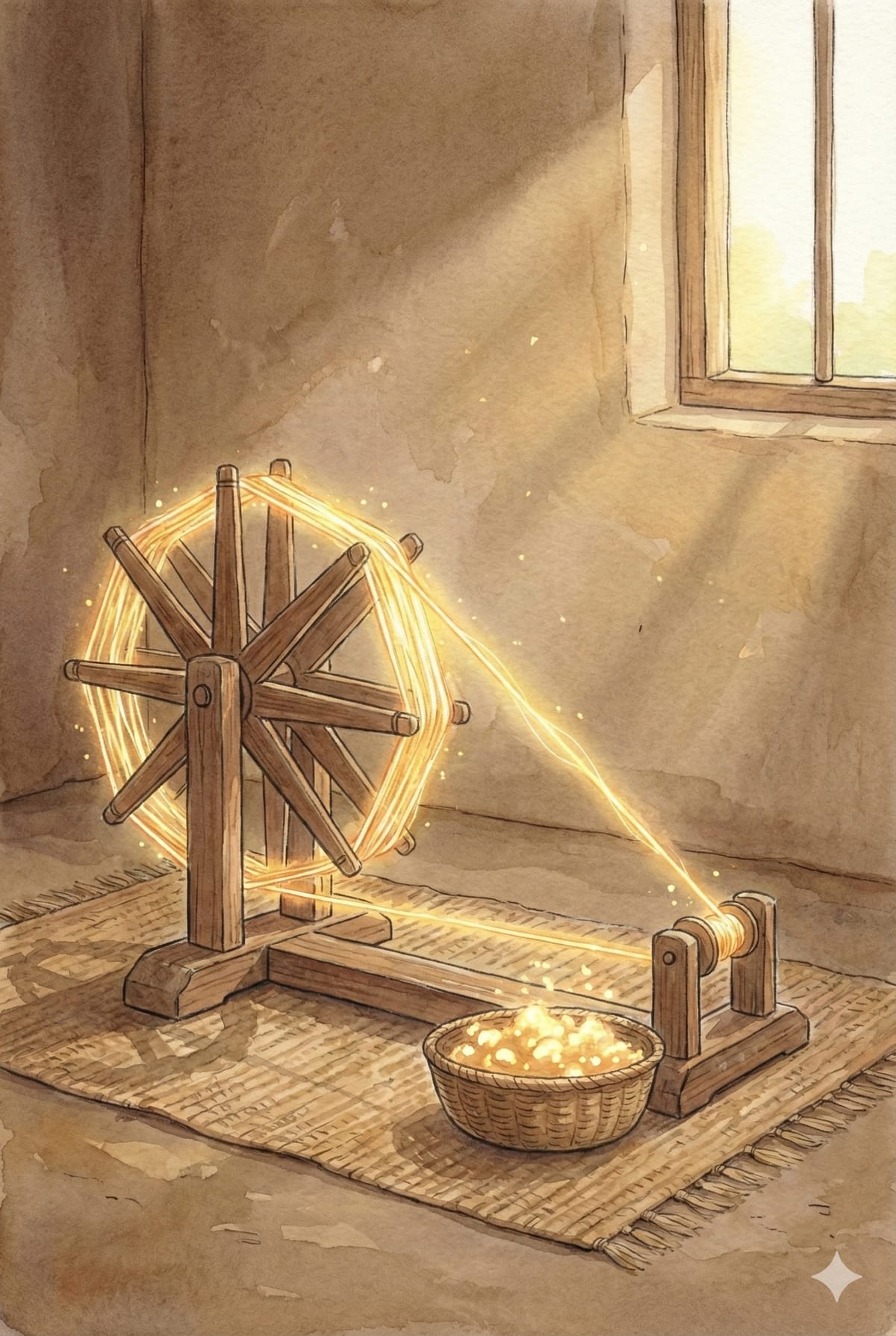
“If you have a thread that does not break, does not get dirty, and does not burn — that thread I will gladly wear. Make it out of compassion. Spin it from contentment. Tie its knot with self-control. Twist it with truth. That is the thread I want.”
Years later, Guru Nanak Dev Ji shared this same idea in a hymn that is still sung today:
ਦਇਆ ਕਪਾਹ ਸੰਤੋਖੁ ਸੂਤੁ ਜਤੁ ਗੰਢੀ ਸਤੁ ਵਟੁ ॥ ਏਹੁ ਜਨੇਊ ਜੀਅ ਕਾ ਹਈ ਤ ਪਾਡੇ ਘਤੁ ॥ ਨਾ ਏਹੁ ਤੁਟੈ ਨ ਮਲੁ ਲਗੈ ਨਾ ਏਹੁ ਜਲੈ ਨ ਜਾਇ ॥ ਧੰਨੁ ਸੁ ਮਾਣਸ ਨਾਨਕਾ ਜੋ ਗਲਿ ਚਲੇ ਪਾਇ ॥
Make compassion the cotton, contentment the thread, self-control the knot and truth the twist. This is the sacred thread of the soul — if you have it, O Brahmin, then put it on me. It does not break, it does not get dirty, it does not burn, it is not lost. Blessed are the people, O Nanak, who go through life wearing such a thread.
— Guru Nanak Dev Ji, Sri Guru Granth Sahib Ji, Ang 471
Nobody put the cotton thread on Nanak that day. The ceremony quietly ended. The relatives went home talking. And the lamp at his window burned a little brighter, as if it had learned a new word for itself.
Counting Grain
The years passed. Nanak grew tall and gentle. When he was eighteen, he married Mata Sulakhni Ji from the town of Batala. Their family soon grew — two sons, Baba Sri Chand and Baba Lakhmi Chand.
Nanak loved his family deeply. But on quiet evenings, he would walk alone in the fields and look up at the sky, the way he had looked at the lamp when he was small. Something in him was waiting.
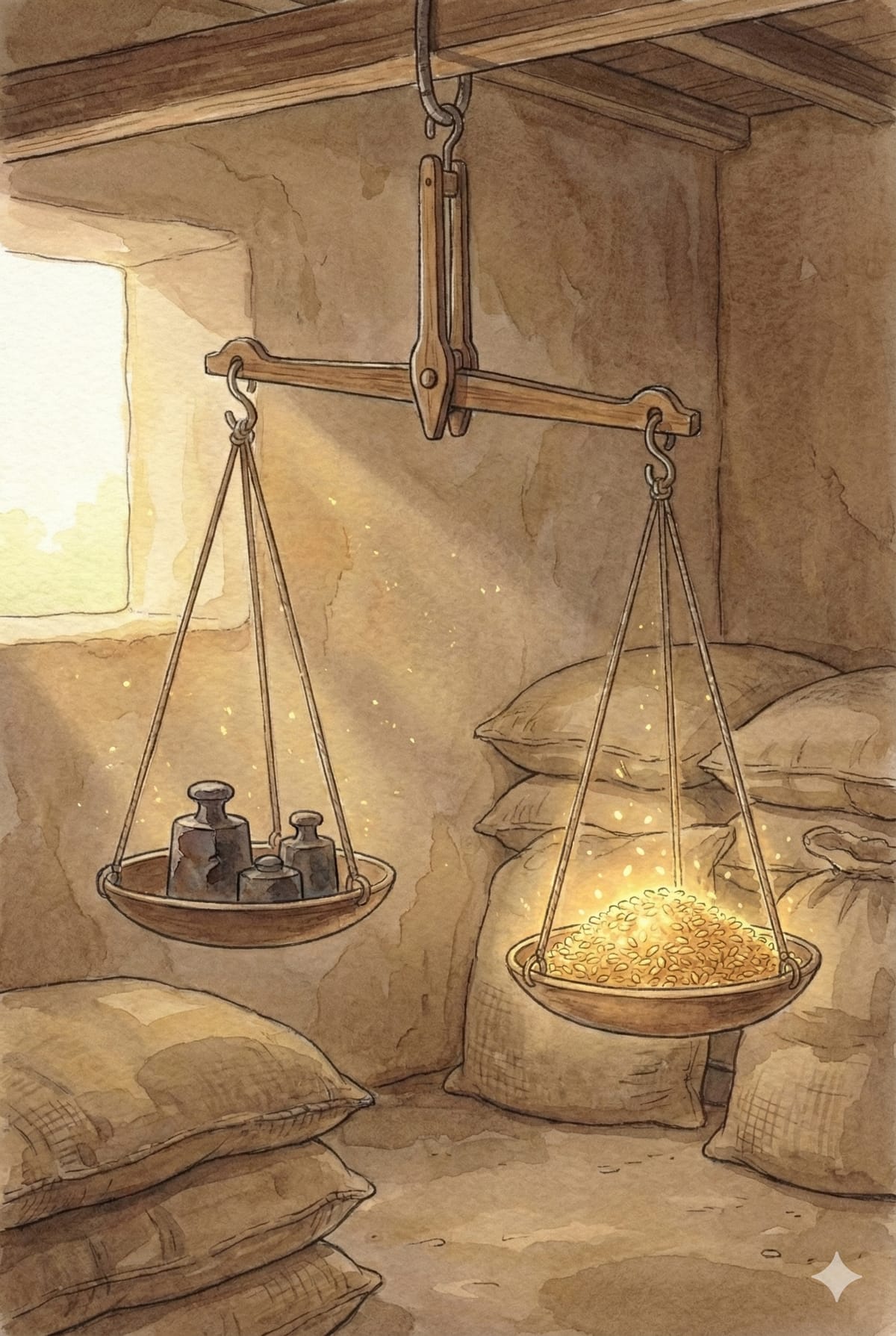
When Nanak was older, his sister Bebe Nanaki and her husband Bhai Jai Ram Ji helped him find work in the town of Sultanpur, managing the grain stores of the local governor, Nawab Daulat Khan. Guru Ji weighed every measure honestly and gave each farmer what was truly owed — not a handful less. There was a stillness in him that drew people close.
There is no Hindu. There is no Musalman

For years, Guru Nanak Ji watched the world around him.
He watched Hindus and Muslims who would not eat together, would not sit together, would not drink from the same well — neighbours all their lives, kept apart by names.
He watched priests collecting offerings from poor families who had no food to spare.
He watched pilgrims travel great distances to bathe in sacred rivers, then return home to lives unchanged.
He watched wealthy men hold grand feasts paid for with the suffering of others.
He watched kind, honest people made to feel small because of the family they were born into.
And the longer he watched, the clearer one thing became. The labels people painted on each other — Hindu, Musalman, high caste, low caste — were hiding the same Light underneath. The Creator did not see those labels at all.
One morning, Guru Nanak Ji stood by the Vein river and spoke the sentence that would echo for the next five hundred years.
“There is no Hindu. There is no Musalman.”
He did not mean that people should stop being who they were. He meant something deeper. He meant that the way we sort each other — you are this, I am that, we cannot share a cup — is not how the Creator sees us. There is one Light in all of us. The labels we paint on the outside cannot change the Light shining underneath.
The people of Sultanpur listened. Some understood. Some argued. Many came back the next day to hear more.
But Guru Nanak Ji knew his message was not just for one town. The suffering he had seen was everywhere — in cities and villages, by rivers and in temples and mosques, wherever people had forgotten the One Light in each other.
It was time to walk.
The Empty Words
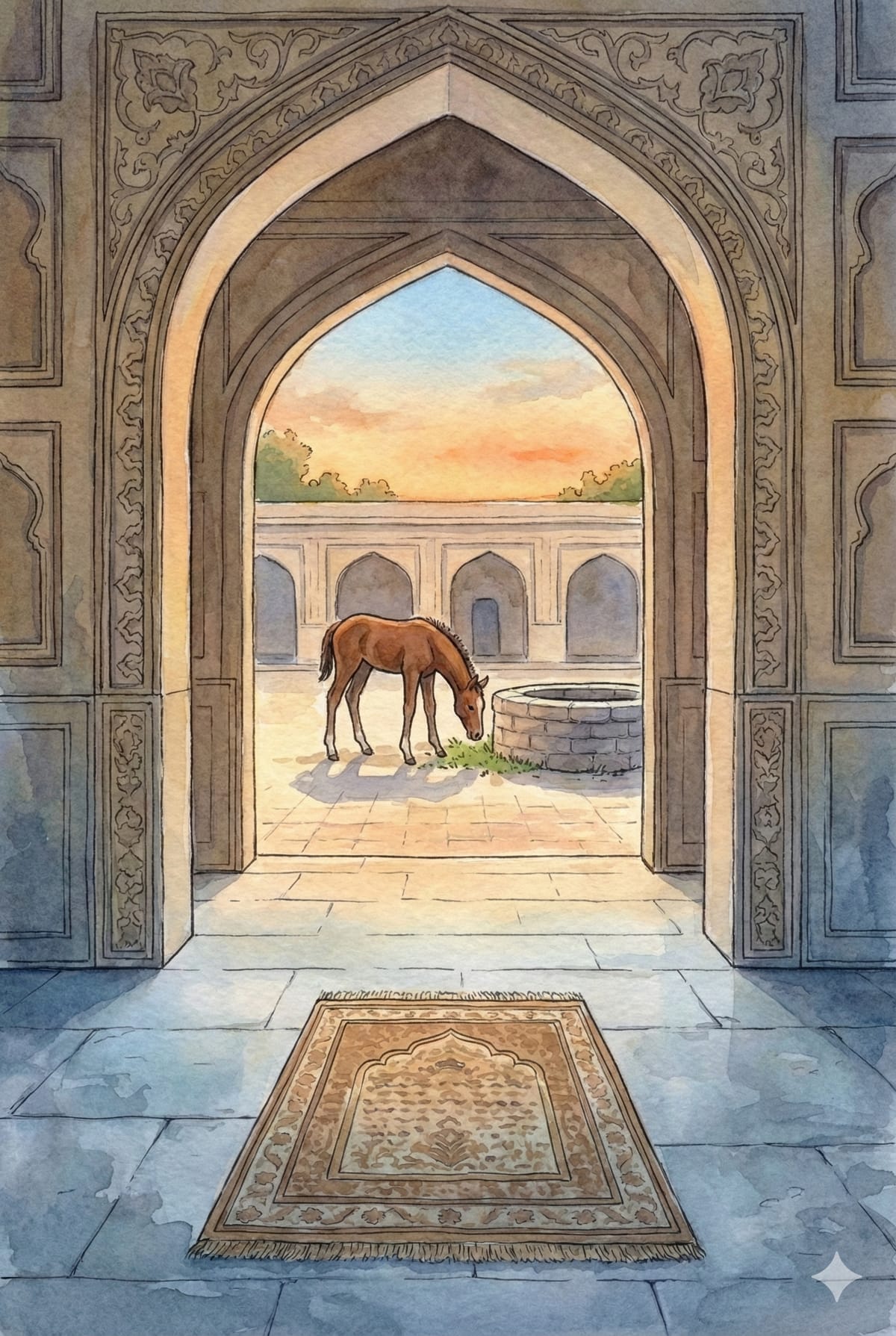
Before Guru Nanak Dev Ji left Sultanpur, one more thing happened that the town would never forget.
News of his teachings had spread quickly. The Qazi — the Muslim religious leader — was offended. The Nawab was curious.
“If you really believe One Creator lives in all of us,” they said, “then come and pray with us in the mosque.”
Guru Nanak Dev Ji agreed.
He walked to the mosque with the Nawab and the Qazi. The prayer began. The Qazi led, bowing and rising, reciting the words everyone knew. The Nawab joined in. The whole congregation moved together.
Guru Nanak Dev Ji stood at the back. He did not bow. He did not recite. He simply watched, the way he had always watched.
When the prayer ended, the Qazi turned on him.
“Why didn’t you pray with us?”
Guru Nanak Dev Ji looked at the Qazi for a long moment.
“Qazi Sahib,” he said gently, “I watched you. Your lips were saying the prayers, but your mind was somewhere else. Tell me honestly — was your mind with the Creator, or wandering far from this room?”
The Qazi’s face went still. It was true. He had been thinking of other things the whole time.
The Nawab looked at the Qazi. The congregation looked at the Qazi.
“Real prayer,” Guru Nanak Dev Ji said, “is when your heart and your mind both kneel together. Just moving your lips does not reach the Creator. Better to pray one true sentence than a thousand empty ones.”
The Qazi did not argue. He could not. And from that day on, the people of Sultanpur began to listen to Guru Nanak Dev Ji in a different way.
The Road Begins
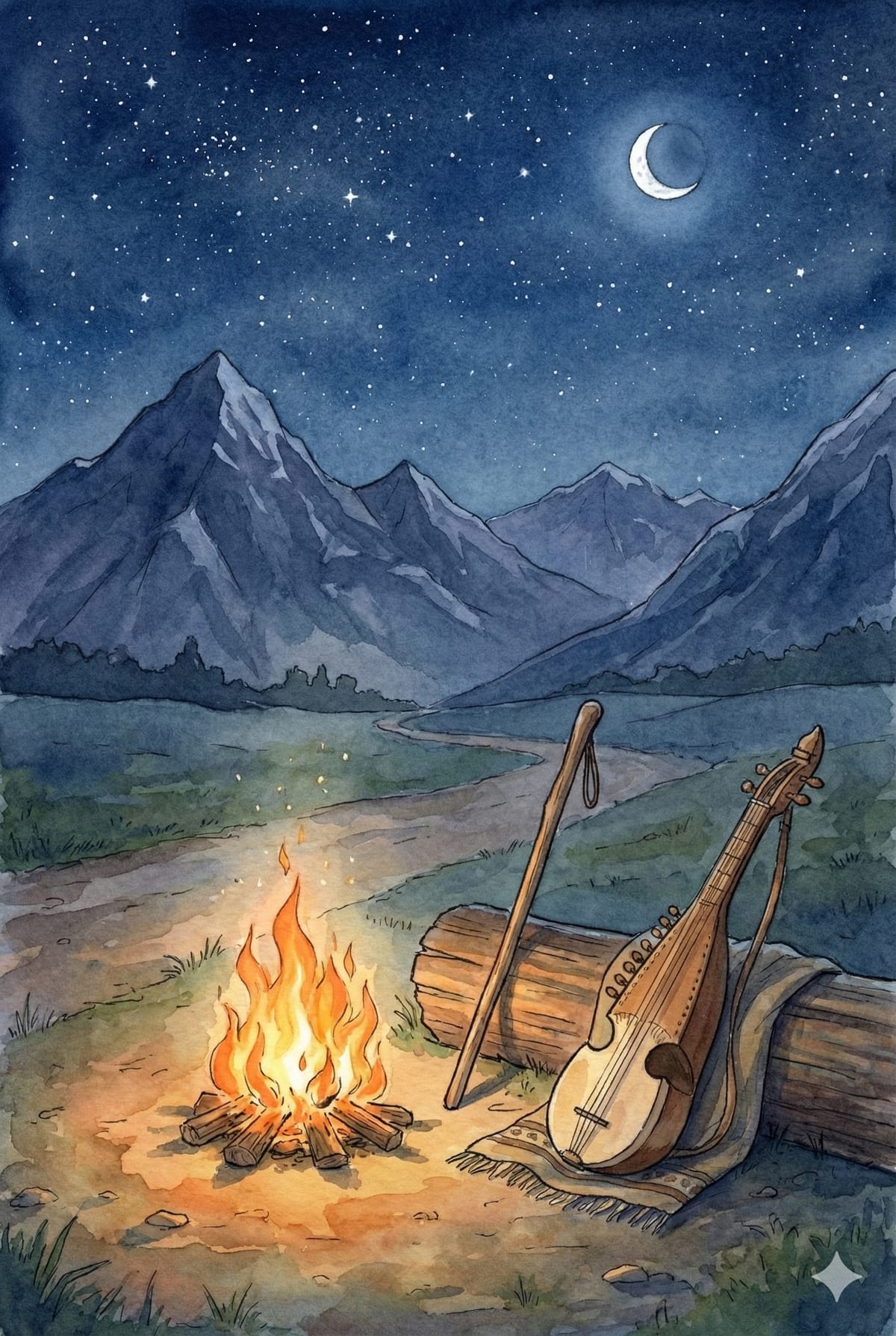
Guru Nanak Dev Ji knew that his message could not stay in one town. He left his work with the Nawab. He gathered his family and made sure they would be cared for. Then he set out.
He did not go alone. His old friend Bhai Mardana Ji came with him — a musician ten years older than Guru Nanak Dev Ji, who had known him since they were both children running in the lanes of Talwandi. Bhai Mardana Ji played the rabab, a stringed instrument that sounded like wind through a window. Wherever Guru Nanak Dev Ji had a hymn to sing, Bhai Mardana Ji’s rabab would carry it.
These journeys are called Udasis. Together, the two friends walked north to the mountains and south to the sea. They crossed deserts. They followed rivers. They sat with shopkeepers and farmers and saints and thieves.
Everywhere they went, Guru Nanak Dev Ji spoke gently and listened first. And then he gave the same simple message in many different ways:
Remember the One Creator. Earn your living honestly. Share what you have with others. Treat every person as your own family — because every person is.
Some of the stories from these journeys are still told today.
Bhai Lalo’s Bread
In a town called Emanabad, there lived a carpenter named Bhai Lalo. He was not rich. He worked hard with his hands, sawing and shaping wood from morning to night. He lived in a small house. He owned almost nothing. But there was a stillness about him that Guru Nanak Dev Ji recognised at once.
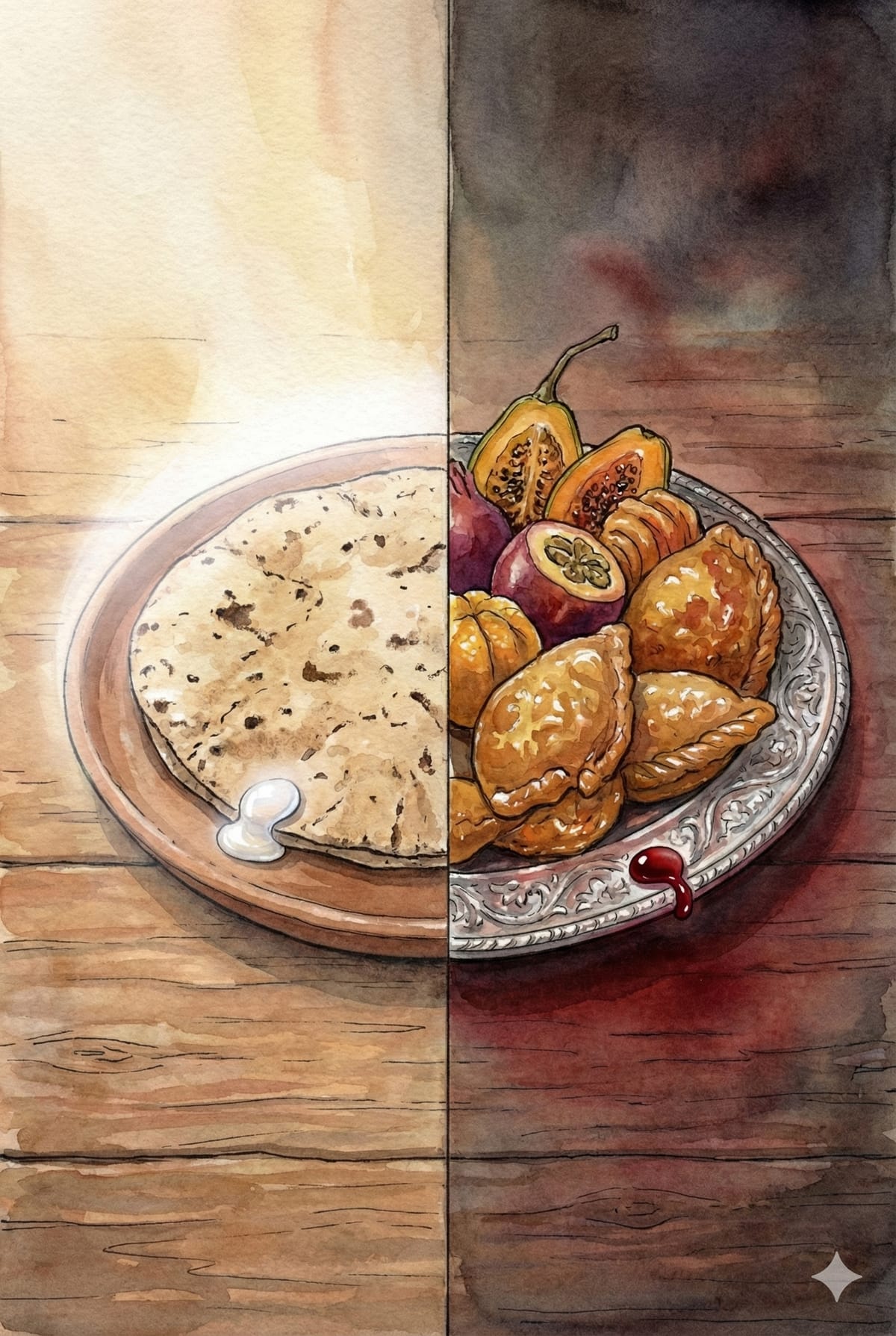
Bhai Lalo invited Guru Nanak Dev Ji and Bhai Mardana Ji to stay with him. He served them bread made from his own flour — coarse, simple bread, but warm and offered with love.
The richest man in the town was an official named Malik Bhago. He took bribes. He squeezed the farmers. He used the law to take what was not his. But once a year, to look like a generous man, he held a great feast for the holy people of the town.
Malik Bhago heard that a wise Guru was in town and was eating in a carpenter’s house. He sent an invitation to Guru Nanak Dev Ji to come to his feast.
Guru Nanak Dev Ji came. He sat down. The servants laid out fine dishes in front of him — sweet rice, butter, almonds. Guru Nanak Dev Ji did not eat.
“Why won’t you eat my food?” Malik Bhago asked.
Guru Nanak Dev Ji looked at the food, and then at the man.
“Malik Bhago,” he said, “Bhai Lalo’s bread is made from honest work. No one wept for it. No one was cheated for it. That is why it is sweet.
“Your feast is paid for with the tears of poor families. You took grain they could not spare. You took coins from people who had no power to refuse. Their suffering is inside this food. How can I eat it?”
Malik Bhago could not look up. He had thought he was generous. He had thought he was holy. He had not stopped to ask where his wealth came from.
That day Malik Bhago changed. He returned what he could. He stopped taking what was not his. And the people of Emanabad learned the lesson Guru Nanak Dev Ji had come to teach: honest bread, however plain, is always sweeter than feasts paid for with someone else’s tears.
Water for Talwandi
Guru Nanak Dev Ji and Bhai Mardana Ji walked east, and one day they came to Haridwar, where the Ganges river flows past a great pilgrimage city. It was festival time. The riverbank was crowded with thousands of people.
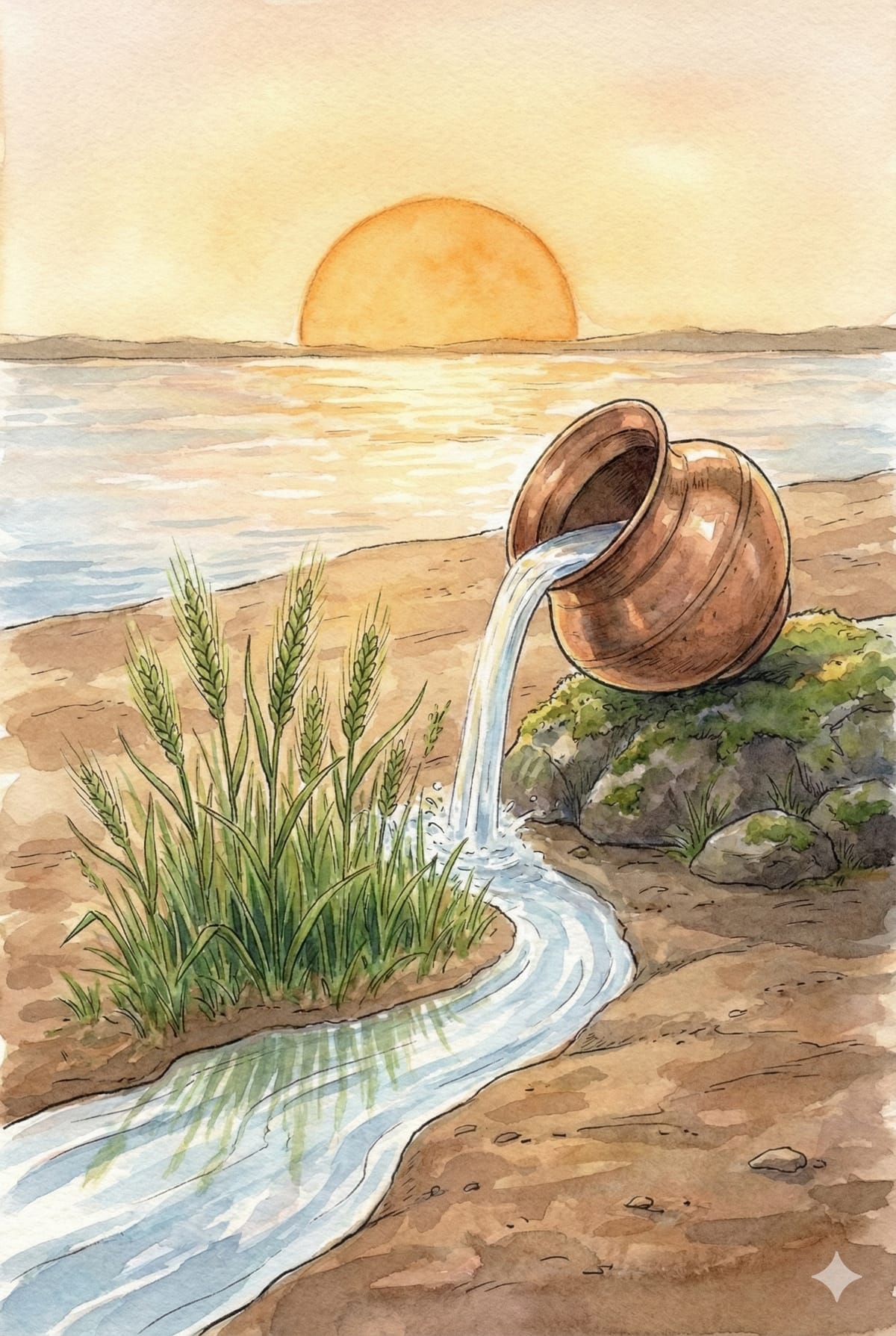
The pilgrims were standing in the water, facing the rising sun, scooping up handfuls of river water and throwing it towards the east.
“What are you doing?” Guru Nanak Dev Ji asked an old man.
“We are sending water to our ancestors,” the man said proudly. “They live near the sun. This water reaches them and pleases them. It is our duty.”
Guru Nanak Dev Ji nodded. He waded into the river. He cupped his hands and began to throw water in the opposite direction — towards the west.
A few people noticed. They laughed. More people gathered.
“What are you doing?” they asked.
“I am watering my fields in Talwandi,” Guru Nanak Dev Ji said calmly. “It has been dry there. The crops need it.”
The crowd laughed louder.
“That’s foolish! Your village is hundreds of miles away. The water you throw just falls back into the river!”
Guru Nanak Dev Ji smiled. He kept scooping.
“If your water can travel millions of miles to the sun and reach your ancestors,” he said, “then surely my water can travel a few hundred miles to my fields?”
The laughter stopped. One by one, people went still.
He was not making fun of them. He was asking them to think. He wanted them to see that doing the same actions year after year, without ever asking what they meant, was not the same as worship.
“The Creator,” he said, “is not pleased by tricks. The Creator is pleased by honest work and a kind heart and a mind that loves Truth. Wherever you stand, the Creator is there. You do not need to send water anywhere.”
That evening, many in the crowd went home quieter than they had come. And Guru Nanak Dev Ji and Bhai Mardana Ji continued east.
The Lamps of the Sky

They came at last to Jagannath Puri, by the sea. A great temple stood there, and every evening the priests performed Aarti — a ceremony of worship using a tray of lamps.
When evening came, the priests lit the lamps. The tray was made of gold and set with jewels. Camphor burned. Incense rose. Drums boomed. The priests waved the tray of lights in slow circles in front of the temple’s stone idol while the people sang.
“Come and join our Aarti,” the priests had invited Guru Nanak Dev Ji.
But when the ceremony began, Guru Nanak Dev Ji quietly stepped outside.
He stood on the temple steps. He looked up.
The sky was darkening, and the stars were starting to come out. The first stars. Then more. Then the moon, rising slow and full over the sea. The wind moved through the palm trees. Somewhere far off, the surf hissed and folded over.
When the ceremony ended, the priests came out, upset.
“Why didn’t you join us?”
Guru Nanak Dev Ji turned and asked Bhai Mardana Ji to play the rabab. And there, on the temple steps, he sang his own Aarti.
ਗਗਨ ਮੈ ਥਾਲੁ ਰਵਿ ਚੰਦੁ ਦੀਪਕ ਬਨੇ ਤਾਰਿਕਾ ਮੰਡਲ ਜਨਕ ਮੋਤੀ ॥ ਧੂਪੁ ਮਲਆਨਲੋ ਪਵਣੁ ਚਵਰੋ ਕਰੇ ਸਗਲ ਬਨਰਾਇ ਫੂਲੰਤ ਜੋਤੀ ॥
The sky is Your tray. The sun and the moon are Your lamps. The galaxies of stars are Your scattered pearls. The wind of the sandalwood forests is Your incense. The wind itself is Your fan. All the world’s plants and flowers offer themselves at Your feet, O Light of all.
— Guru Nanak Dev Ji, Sri Guru Granth Sahib Ji, Ang 13 (Raag Dhanasari)
Bhai Mardana Ji’s rabab carried the hymn out into the warm evening. The priests listened. They had never heard anything like it.
He was telling them that the Creator’s worship is already happening — all the time, everywhere. The sky itself is the tray of lamps. The stars are the pearls. The flowers offer themselves up. We don’t need to copy this with a smaller tray inside a stone room. We need only to look up, and notice, and join in.
To this day, this hymn is sung in every Sikh home and Gurdwara. And every time it is sung, the sky becomes a temple again.
Sajjan the Thug
The travels continued. On the way to Multan, the two friends stopped at an inn run by a man named Sajjan. His name meant good friend. He dressed in saint’s robes. He welcomed his guests warmly. He fed them well. He gave them soft beds.
But after his guests fell asleep, Sajjan would rob them — and worse. Travellers had been disappearing on that road for years.
Sajjan looked at Guru Nanak Dev Ji and Bhai Mardana Ji and thought: wealthy travellers. Tonight will be a good night. He brought out his finest food. He laid out his best beds.
Guru Nanak Dev Ji did not eat. He did not lie down.
“Sleep, sleep,” Sajjan urged.
“I have one task to finish first,” Guru Nanak Dev Ji said. “Then I will sleep.”
He turned to Bhai Mardana Ji and asked him to play the rabab. And under the silent stars, he began to sing a hymn that the inn-keeper could hear through the wall:
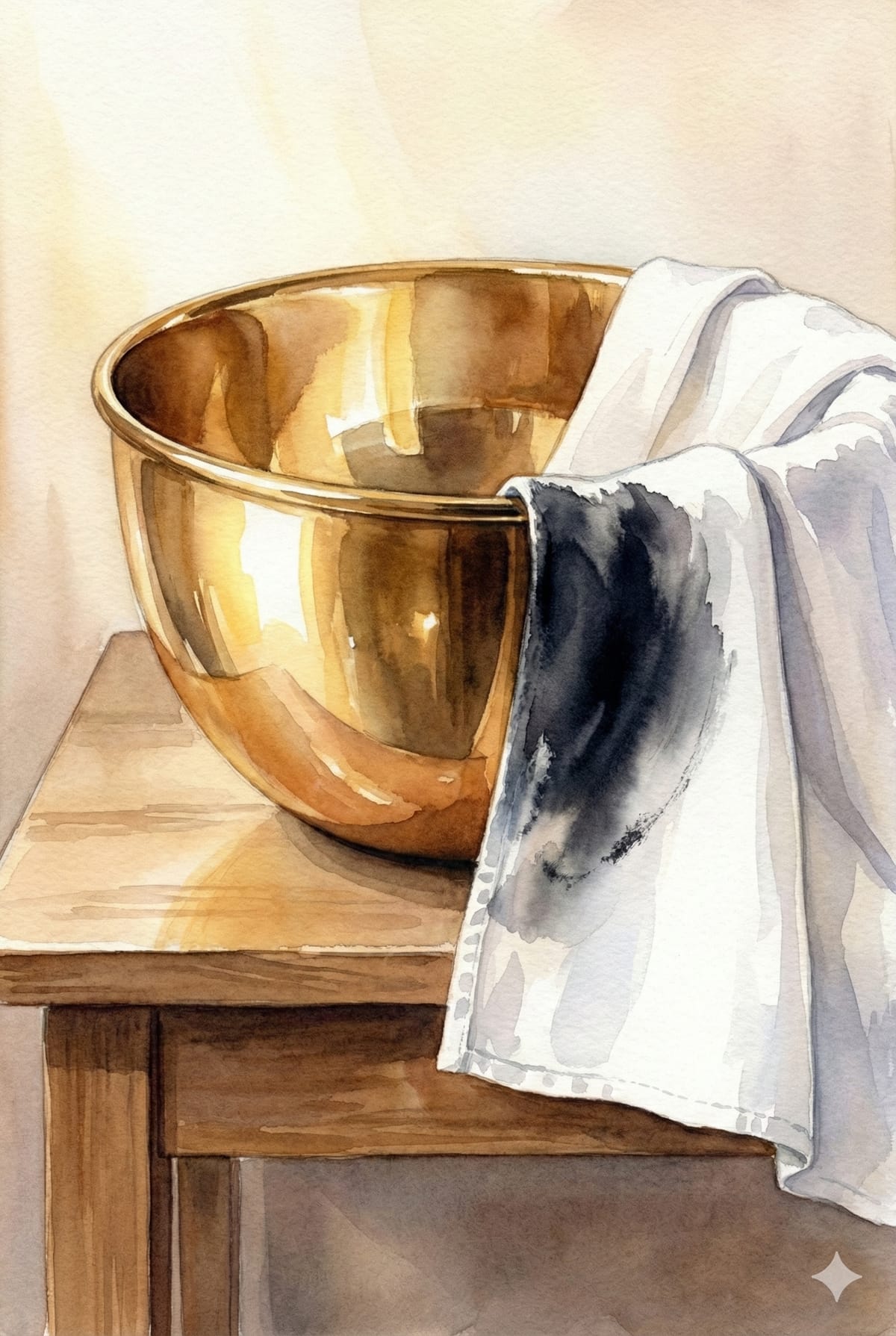
ਉਜਲੁ ਕੈਹਾ ਚਿਲਕਣਾ ਘੋਟਿਮ ਕਾਲੜੀ ਮਸੁ ॥ ਧੋਤਿਆ ਜੂਠਿ ਨ ਉਤਰੈ ਜੇ ਸਉ ਧੋਵਾ ਤਿਸੁ ॥
Bronze is bright and shining, but when you rub it, the blackness underneath comes off on your hands. Washing it does not remove the impurity, even if it is washed a hundred times.
— Guru Nanak Dev Ji, Sri Guru Granth Sahib Ji, Ang 729 (Raag Suhi)
The words went in like a key.
Sajjan sat very still in the next room. He understood the hymn was about him. He had polished himself on the outside. He had worn the robes. He had spoken the warm words. But inside, he had been black with what he had done.
He pushed open the door and fell at Guru Nanak Dev Ji’s feet, weeping. He confessed everything — all the people he had robbed, all the lives he had ruined.
“Please,” he sobbed, “what do I do now?”
Guru Nanak Dev Ji lifted him gently and looked at him with no judgement at all.
“It is never too late, my friend,” he said. “Give back what you can. Take only what you earn. Spend the rest of your life serving people, not preying on them. Your name means good friend — become one.”
And Sajjan did. He turned his inn into a true rest-house, where travellers were safe. He spent the rest of his life living the meaning of his name.
Guru Nanak Dev Ji taught, all his life, that no one is beyond change. The Light in a person can be buried — but it cannot be put out.
Kartarpur
After many years of walking, Guru Nanak Dev Ji decided it was time to settle in one place. He founded a new town on the banks of the river Ravi and called it Kartarpur — the City of the Creator.
This is where he showed the world that his teaching was not just words. It was a way to live.
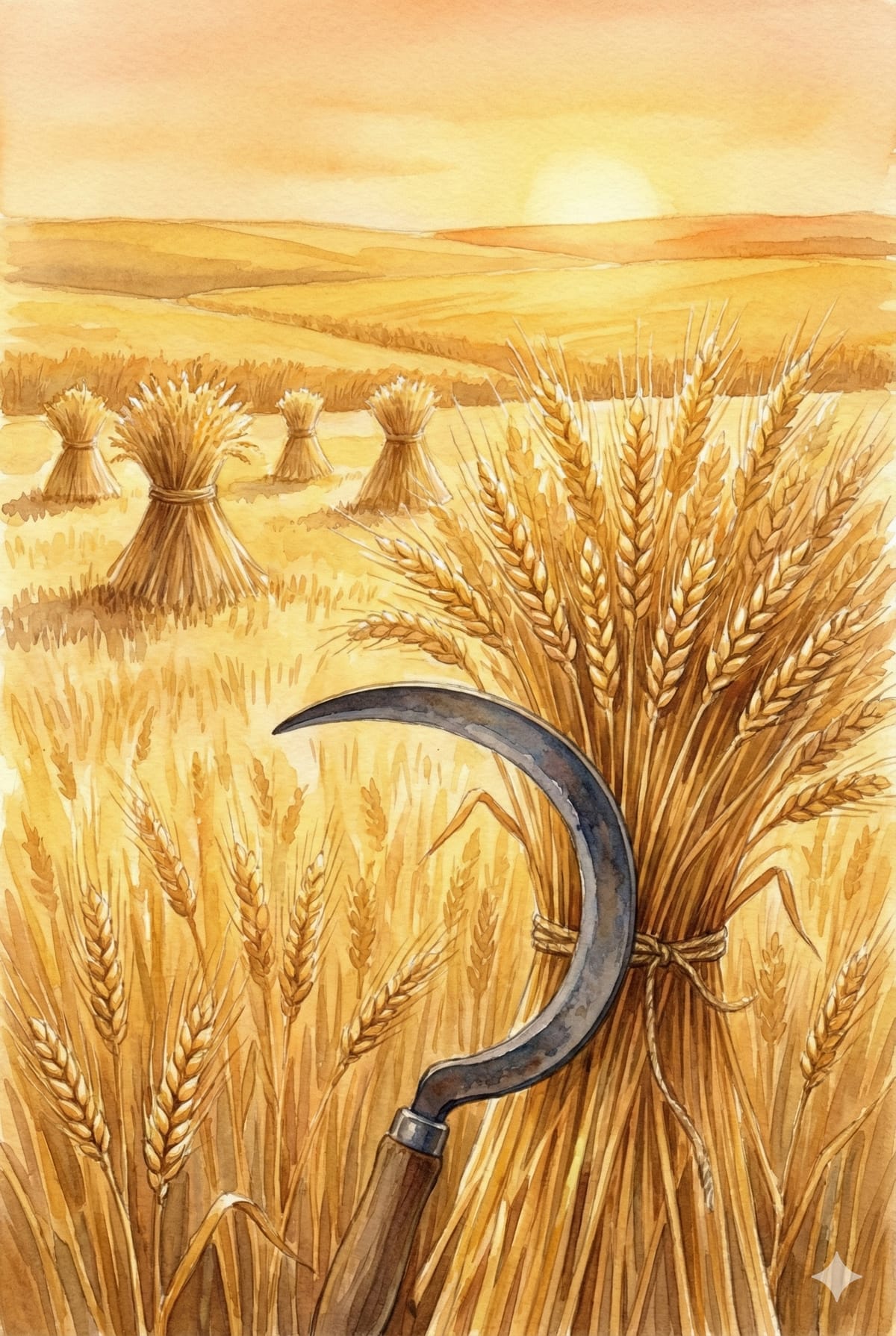
Every morning before sunrise, he woke and sang. Then he went out into the fields and worked — pushing the plough like everyone else, his hands in the same earth. In the afternoons, people came to ask questions and he answered them. In the evenings, the whole community gathered to sing.
And every single day, no matter who came, there was Langar.
Langar was a community kitchen Guru Nanak Dev Ji started. Anyone who came to Kartarpur — rich or poor, of any caste, of any faith — was first welcomed to sit on the floor with everyone else and share a meal. The same food. Sitting in the same row, called a pangat.
This was a revolution. In those days, people of different castes did not eat together. Rich and poor did not eat together. Guru Nanak Dev Ji simply said: In this house, we do.
In Kartarpur, he taught three simple lessons that became the heart of the Sikh way of life:
- Naam Japna — remember the Creator always.
- Kirat Karo — earn an honest living with your own two hands.
- Vand Chakko — share what you have with others.
These were not rules to make people afraid. They were a way to live so that the inner Light shines brighter every day.
The Lamp That Lit Another
The years passed. Guru Nanak Dev Ji grew old. He began to think about who would carry the teaching after him.
A devoted follower had come to Kartarpur named Bhai Lehna Ji. He was different from the others. When Guru Nanak Dev Ji asked something difficult, Bhai Lehna Ji did it without making a face. He carried heavy loads. He worked through the night when there was work to be done. He never argued about whose turn it was.
Guru Nanak Dev Ji tested him many times. Once, on a cold rainy night, a wall in the dharamshala collapsed. Guru Nanak Dev Ji called the community together and asked who would rebuild it. The others made excuses — too dark, too cold, do it tomorrow. Bhai Lehna Ji picked up the bricks and worked alone until the wall stood again.
It was not the wall that mattered. It was that Bhai Lehna Ji had no inside-self that was different from his outside-self. The thread he wore was made of the things Guru Nanak Dev Ji had asked for at ten years old: compassion, contentment, self-control, truth.
One day, Guru Nanak Dev Ji called the whole community together. He placed five coins and a coconut in front of Bhai Lehna Ji. Then he did something everyone gasped to see — he bowed, and touched his own forehead to Bhai Lehna Ji’s feet.
“From today,” he said, “your name is Angad — part of my own body. The Light that came to me will now shine through you.”
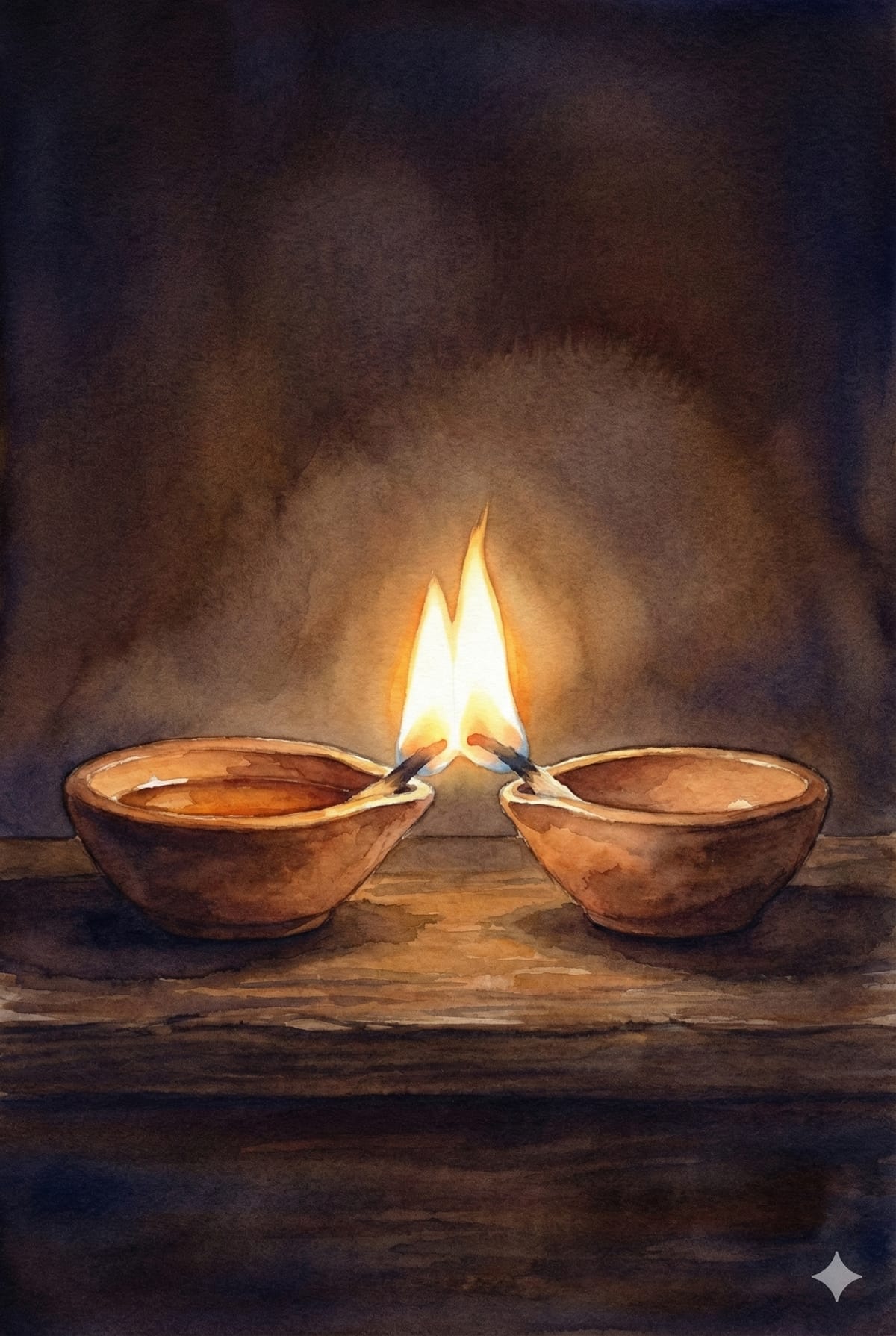
This is how the second Guru of the Sikhs began. Not by birth. Not by family. By a Light passed from one lamp to another — and the first lamp burned no dimmer for the giving.
And the Light Walks On
In September 1539, at Kartarpur, Guru Nanak Dev Ji peacefully left this world.
But the Light did not end with him.
It passed to Guru Angad Dev Ji.
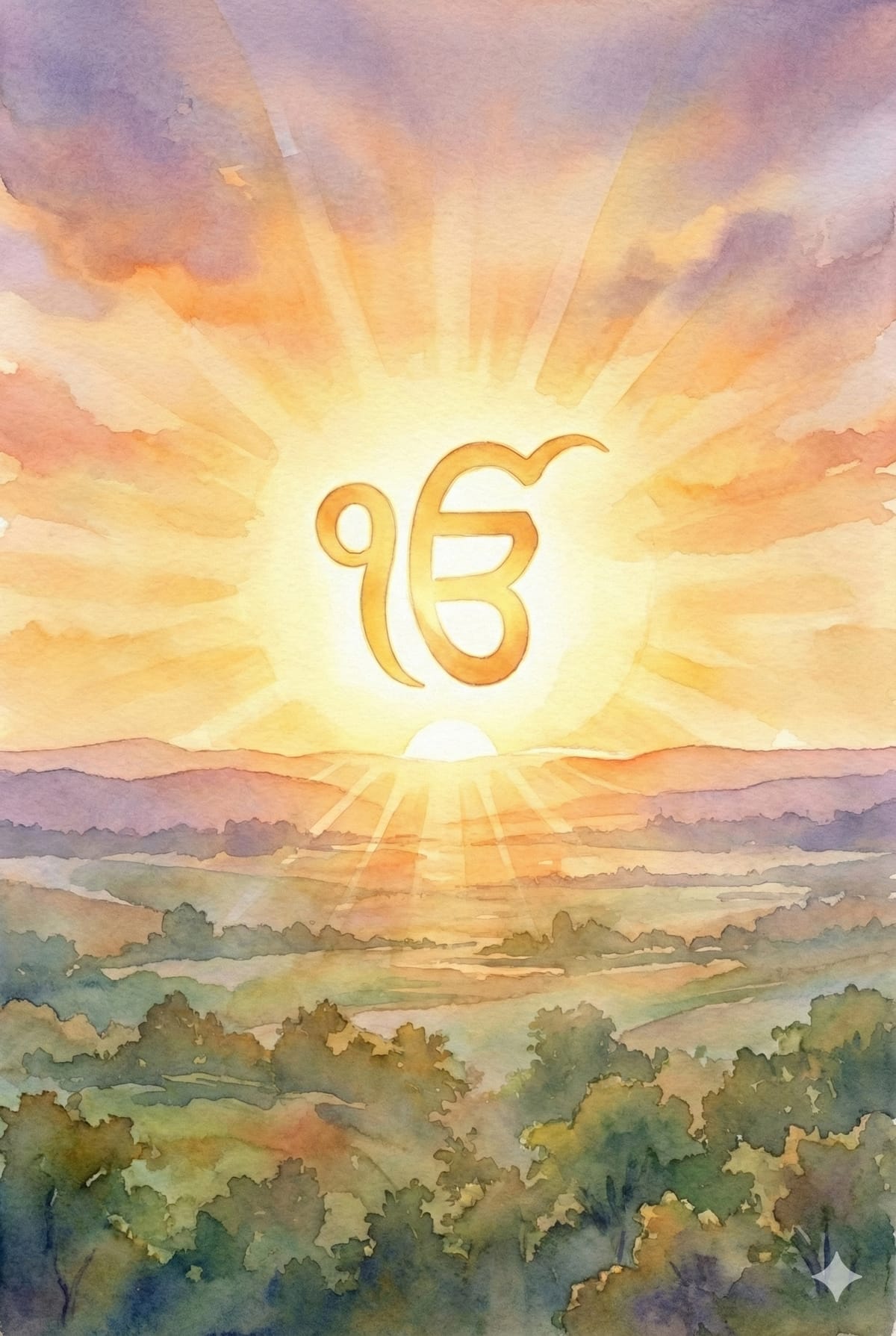
From Guru Angad Dev Ji, it passed on, through ten Gurus, for over two hundred years — until it found its lasting home in Sri Guru Granth Sahib Ji, where it still shines today for anyone who comes to listen.
The lamp at the window of a small house in Talwandi, lit so long ago, is the same lamp that lights our lives today.
Reflection
When you next see a light glowing — the morning sun, the stars at night, a candle on a birthday cake — think for a moment of the boy in Talwandi who noticed everything.
The thread he asked for is still being made:
- Every time you choose to be kind, you spin a little compassion.
- Every time you are happy with what you have, you weave in contentment.
- Every time you control your temper, you tie a knot of self-control.
- Every time you tell the truth, even when it is hard, you twist in truth.
This is the thread that does not break, does not get dirty, and does not burn.
You can wear it now. You can wear it your whole life. And the Light it protects is the same Light Guru Nanak Dev Ji saw in everyone he met.
Quick Facts
| Fact | Detail |
|---|---|
| Born | 15 April 1469 |
| Birthplace | Rai Bhoe Ki Talwandi (now Nankana Sahib, Pakistan) |
| Parents | Mehta Kalu Ji and Mata Tripta Ji |
| Sister | Bebe Nanaki (5 years older) |
| Wife | Mata Sulakhni Ji (married 1487, from Batala) |
| Sons | Baba Sri Chand and Baba Lakhmi Chand |
| Lifelong companion | Bhai Mardana Ji |
| Town founded | Kartarpur, on the river Ravi |
| Successor | Guru Angad Dev Ji (Bhai Lehna Ji) |
| Passed away | September 1539, at Kartarpur |
| Known for | Founding Sikhi; the message of One Creator, one human family, honest living, and sharing |
Discussion Questions
Let’s Talk About It: Nanak refused the cotton thread when he was only ten years old, in front of his whole family. What gave him the courage to question something everyone else accepted as normal?
Let’s Talk About It: Guru Nanak Dev Ji chose to eat Bhai Lalo’s simple bread instead of Malik Bhago’s rich feast. Has there ever been a time when something simple and honest felt better to you than something fancy?
Let’s Think About It: When Guru Nanak Dev Ji said “There is no Hindu, there is no Musalman,” what do you think he was really trying to say? Was he asking people to give up who they were, or to see something deeper?
Let’s Think About It: At the Aarti in Puri, Guru Nanak Dev Ji said the whole sky is the Creator’s tray of lamps. Next time you look up at the night sky, what do you think he wanted you to feel?
Let’s Think About It: Sajjan had done terrible things, but Guru Nanak Dev Ji did not give up on him. What does that teach us about how we should treat people who have made big mistakes?
Let’s Try It: Guru Nanak Dev Ji gave us three simple practices — Naam Japna (remembering the Creator), Kirat Karo (working honestly), and Vand Chakko (sharing what you have). Pick one of the three. What is one small thing you could do this week to practise it?
Let’s Try It: Take a quiet moment outside today and look at the sky, or a tree, or a bird — the way young Nanak looked at the lamp. What do you notice that you would normally walk past?
Word Meanings
| Word | Meaning |
|---|---|
| Aarti | A ceremony of worship using a tray of lamps. Guru Nanak Dev Ji taught that the whole sky is already the true Aarti. |
| Bebe | A respectful and loving word for elder sister in Punjabi. |
| Dharamshala | A simple community hall where people gathered to sing, listen, and learn — the early form of today’s Gurdwara. |
| Gurdwara | A Sikh place of worship — the words mean “the door to the Guru”. |
| Gurmukhi | The script used to write the Punjabi language and Sri Guru Granth Sahib Ji. |
| Guru | An enlightener who shows the way from darkness to Light. |
| Ik Onkar | ”One Creator” — the foundational teaching of Sikhi that there is one source of all things. |
| Janeu | A cotton thread worn over the shoulder in some Hindu traditions. Guru Nanak Dev Ji taught that real holiness is not made of cotton. |
| Kartarpur | The town Guru Nanak Dev Ji founded on the river Ravi — “the City of the Creator”. |
| Kirat Karo | Earning your living honestly through your own effort. |
| Langar | The community kitchen at the Gurdwara where everyone sits together and eats the same food. |
| Naam Japna | Remembering the Creator throughout the day. |
| Pangat | Sitting together in a row, as everyone does in langar — a sign of equality. |
| Qazi | A Muslim religious leader who leads prayer and gives judgements. |
| Rabab | A stringed instrument played by Bhai Mardana Ji to accompany Guru Nanak Dev Ji’s hymns. |
| Sangat | The community of people who gather to learn and sing the praises of the Creator together. |
| Sri Guru Granth Sahib Ji | The sacred scripture of the Sikhs, containing the hymns of the Sikh Gurus and other devotional saints from many traditions. |
| Udasi | One of Guru Nanak Dev Ji’s long teaching journeys across many lands. |
| Vand Chakko | Sharing what you have with others. |
| Waheguru | A name for the Creator — the Wonderful One. |
About This Story
This is the story of Guru Nanak Dev Ji (1469–1539), the founder of Sikhi and the first of the ten Sikh Gurus. The episodes told here — the Janeu refusal, his years of honest work at Sultanpur, the declaration “there is no Hindu, there is no Musalman” by the Vein river, the visit to the mosque, the meal with Bhai Lalo, the morning at Haridwar, the Aarti at Puri, the meeting with Sajjan, the founding of Kartarpur, and the passing of Guruship to Bhai Lehna as Guru Angad Dev Ji — are drawn from the traditional accounts of his life, known as the Janamsakhis, and from later histories of the Sikh Gurus.
The Sikh tradition does not ask us to take every detail of the Janamsakhi stories as exact history. What matters is the teaching they carry: that there is One Creator and one human family; that honest work is sacred; that ritual without meaning is empty; and that the Light in a person can never be put out, only buried for a while.
The three Gurbani hymns quoted in this book — the Janeu shabad on Ang 471, the Aarti on Ang 13, and the bronze couplet on Ang 729 — are all composed by Guru Nanak Dev Ji himself and are sung in Sikh homes and Gurdwaras around the world today.
Explore More
- The Thread That Never Breaks — A picture-book retelling of the Janeu story for younger readers
- The Missing Bowl — A story from Guru Nanak Dev Ji’s travels with Bhai Mardana Ji
- The Letters That Belong to Everyone: The Life of Guru Angad Dev Ji — The next book in the series, on the second Sikh Guru who gave the gift of reading to everyone
- Why Do We Bow in Gurdwara? — A guide explaining what we are really bowing to